The kaleidoscopic array of peoples, languages, customs and material cultures found in the Indonesian archipelago is truly astounding, for living here are over 100 distinct ethnic groups, each with its own cultural identity, who together speak a total of more than 300 mutually unintelligible languages! These figures are in fact rather conservative estimates, developed by Dutch scholars during the 1930s on the basis of highly incomplete data, and lively debates continue to rage as to just how Indonesian cultural units ought to be defined.
People, Culture & Religion of Indonesia
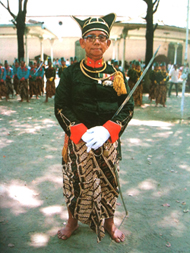
Culture – The present day culture of Indonesia is an outcome of the interplay of age-old- traditions from the time of early migrants and the Western thought brought by Portuguese traders and Dutch colonists. The basic principles, which guide life include the concepts of mutual assistance or “gotong royong” and consultations or “musyawarah” to arrive at a consensus or “mufakat”. Derived from rural life, this system is still very much in use in community life throughout the country. Though the legal system is based on the Old Dutch penal code, social life as well as the rites of passage is founded on customary or “adat” law, which differs from area to area. ”Adat” law has been instrumental in maintaining gender equality in Indonesia.
A number of questions are often posed; how can each group best be characterized in what ways are they related to one another; and where did they come from? Yet even after decades of work and hundreds of studies, the picture is still far from complete.
Europeans behave differently from the Indonesian people in many ways. In fact, you could write an entire book about the differences. The following hints should help you avoid the biggest misunderstanding.
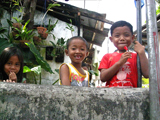
Etiquette –Indonesian folk are extremely friendly and open. Wherever you go, you will be frequently greeted by children even adults with phrase “hello mister” , “hello miss” . The most important things to remember are: don’t get angry, stay calm and retain a sense of humour at all times. Indonesian see showing anger are severe character flaw. A grin is your best weapon. Do not stroke anyone’s head or criticise people in the company of others. Indonesian are particularly sensitive about loosing face, and being seen to be criticised will do this. Bad news or displeasure must be expressed in private. Hand and feet: Pointing to somebody is considered rude. If you wish to indicate somebody’s use a downward swing of the whole hand. Never put your feet up on a table and always take your shoes off before entering someone’s home and something even a museum. When you sit do not cross your legs in a manner that leave the sole or point of your foot pointing towards someone.
Curiosity – Indonesians are hospitable people and it takes little or no effort to strike up a conversation with a complete stranger. Questions about age, salary, religion and other issues which we would consider highly personal are everyday conversation topics in Indonesia. The chances are high that you will find yourself in conversations with many locals, especially in areas less frequented by tourists. They will want to know everything about you, and may even wish to touch your hair to convince themselves that it is real. Other people may engage you in conversation simply to practise their English.
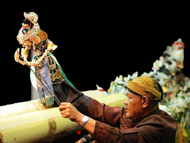
Dance & Drama – Dance, storytelling and theater of one sort another are ubiquitous in Indonesia, for they are elements in a traditional cultural life that is all-encompassing in which the performing arts fulfill a wide variety of sacred and secular needs. Dancers, shamans, actors, puppeteers, priests, storytellers, poets and musicians are members of the community who perform vital roles in informing, entertaining, counseling and instructing their fellows in the well-worn ways of tradition. To Indonesians at least, a coherent society is utterly unthinkable without them. There is such a variety of dance and dramatic traditions throughout the archipelago that is impossible to speak of single, unified tradition. The famous dance dramas of Java and Bali are derived from Hindu mythology and often feature fragments from the Hindu epics such as Ramayana and Mahabharata.
Textile Forms - People with knowledge of textiles will agree that Indonesia has the largest variety of traditional textiles in the world. Every ethnic group seems to have had their own unique tradition of fabric artistry. The eastern islands are home to the ikat technique, Sumatra is home to songkets, and Java is famous for its stunning batiks. Batik still plays a part in modern Javanese culture. The creation of intricate batik requires a huge amount of patience. It must first be sketched, parts of the fabric require particular treatment with wax and the cloths must be dyed, washed and dried. The dying and wax treatment has to be repeated as many times as is necessary to create the desired number of colours.
Arts & Crafts – Indonesian art forms are greatly influenced by religion. The crafts of Indonesia vary in both medium and art form. As a whole the people are artistic by nature and express themselves on canvas, wood, metals, clay and stone. The batik process of waxing and dyeing originated in Java centuries ago and classic designs have been modified with modern trends in both pattern and technology. There are several centres of Batik in Java, the major ones being Yogyakarta, Surakarta, Pekalongan and Cirebon. Indonesia is rich in handicrafts. Various forms of handicrafts practiced are: woodcarvings for ornamentation and furniture, silverwork and engraving from Yogyakarta and Sumatra; filgree from South Sulawesi and Bali with different styles of clay, sandstone and wood sculptures. These are but a few of the handicrafts found in Indonesia. The variety is once again as large as the variety of different cultures, from primitive carvings to elaborate cloth, cane and bamboo items, gold and silver jewellery and necklaces made from kauri shells. You can also find traditional items such as paintings, krisses (Javanese daggers), dance masks, wayang puppets and musical instruments. It is not at all difficult to find fantastic souvenirs.
Religion – While all of Indonesia’s more than 160 million people are officially listed as adherents of one or another of four great ” World Religions” practiced in the archipelago: Islam, Christianity, Hinduism (which, incidentally, makes Indonesia by far the world’s larger Muslim nation), Indonesians actually exhibit almost infinite variety in what they do and believe in spiritual matters. The reason is that here, as elsewhere, religious beliefs and practices are strongly tinged, if not entirely dominated, by local traditions-the corpus of private rites, public rituals, communal knowledge and customary laws that that is passed from generation to generation and forms the distinctive fabric of each society- known as the Adat (Custom) of an ethnic group or community. So great is the identification of most Indonesians with their respective Adat and religion, that these are commonly said to constitute ethnic identity.
In general - Remember at all times that you are visitors in this foreign land. Their behaviour and customs are not bizarre, yours are!


 Culture – The present day culture of Indonesia is an outcome of the interplay of age-old- traditions from the time of early migrants and the Western thought brought by Portuguese traders and Dutch colonists. The basic principles, which guide life include the concepts of mutual assistance or “gotong royong” and consultations or “musyawarah” to arrive at a consensus or “mufakat”. Derived from rural life, this system is still very much in use in community life throughout the country. Though the legal system is based on the Old Dutch penal code, social life as well as the rites of passage is founded on customary or “adat” law, which differs from area to area. ”Adat” law has been instrumental in maintaining gender equality in Indonesia.
 Dance & Drama – Dance, storytelling and theater of one sort another are ubiquitous in Indonesia, for they are elements in a traditional cultural life that is all-encompassing in which the performing arts fulfill a wide variety of sacred and secular needs. Dancers, shamans, actors, puppeteers, priests, storytellers, poets and musicians are members of the community who perform vital roles in informing, entertaining, counseling and instructing their fellows in the well-worn ways of tradition. To Indonesians at least, a coherent society is utterly unthinkable without them. There is such a variety of dance and dramatic traditions throughout the archipelago that is impossible to speak of single, unified tradition. The famous dance dramas of Java and Bali are derived from Hindu mythology and often feature fragments from the Hindu epics such as Ramayana and Mahabharata.
  Arts & Crafts – Indonesian art forms are greatly influenced by religion. The crafts of Indonesia vary in both medium and art form. As a whole the people are artistic by nature and express themselves on canvas, wood, metals, clay and stone. The batik process of waxing and dyeing originated in Java centuries ago and classic designs have been modified with modern trends in both pattern and technology. There are several centres of Batik in Java, the major ones being Yogyakarta, Surakarta, Pekalongan and Cirebon. Indonesia is rich in handicrafts. Various forms of handicrafts practiced are: woodcarvings for ornamentation and furniture, silverwork and engraving from Yogyakarta and Sumatra; filgree from South Sulawesi and Bali with different styles of clay, sandstone and wood sculptures. These are but a few of the handicrafts found in Indonesia. The variety is once again as large as the variety of different cultures, from primitive carvings to elaborate cloth, cane and bamboo items, gold and silver jewellery and necklaces made from kauri shells. You can also find traditional items such as paintings, krisses (Javanese daggers), dance masks, wayang puppets and musical instruments. It is not at all difficult to find fantastic souvenirs.
 In general
- Remember at all times that you are visitors in this foreign land. Their behaviour and customs are not bizarre, yours are!
In general
- Remember at all times that you are visitors in this foreign land. Their behaviour and customs are not bizarre, yours are!


 TrulyTravelIndonesia.Com