Affordable Luxury Car Rentals, Tours, Quality Property Rental & Concierge Service In Jakarta-West Java.

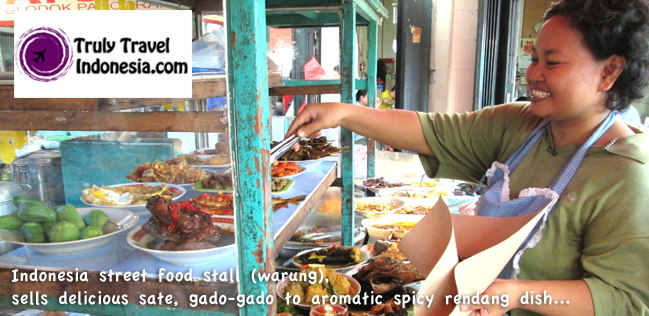
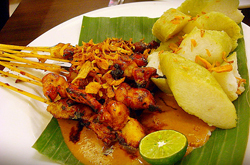 Rice is the basic ingredients of meals but the side dishes vary in ingredients and spiciness depending on the island. Javanese cuisine can be categorised into four regions; Sundanese (western Java), central Javanese, eastern Javanese and Maduran Javanese. Meals in central Java are cooked chicken (ayam) and gudeg. Javanese chickens are free-range, and wander everywhere in the villages. Consequently, they have a much better taste than factory farmed chickens. The Javanese cook their chicken for a couple of hours in a mix of herbs, spices and coconut milk before roasting them or deep-frying them for just over a minute at high temperatures, to crisp the outside. Gudeg is a delicacy from Yogyakarta and consists of new sweet potatoes boiled in coconut milk and herbs, served with chicken, eggs and buffalo meat which has been cooked with sambal sauce. An area’s religion also influences the ingredients. Balinese are the only Indonesians who eat pork, while they see the consumption of beef, popular throughout the country, as taboo. Do not expect local Indonesian food to resemble the sort of Indonesian food that you may encounter in Europe. The most authentic dishes can be found in the warung, which are improvised stalls and kiosks in the streets. The cooks steam, deep-fry and cook in wadjans (Indonesian woks). You are better off going to the busiest of these kiosks, as this is usually indicates that the food is fresher and of better quality.
 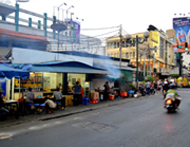 Jakarta Street Food Scene – Living in a country that has endless variety of food and drinks, Indonesians do eat out, but the majority does not go to restaurants. The local food scene relies heavily on street food. Indonesians savour the delicious meals offered by ubiquitous street vendors day and night for breakfast, lunch and dinner. Street food is a quick meal sold by a vendor with a push cart, basket, at a stall, or possibly at a store where customers can see the preparation of food clearly. It provides a close connection between the customer and the street food, unlike having a plate of food in a restaurant.
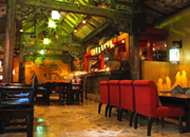 Jakarta Dining Experience in Metropolitan City – Jakarta today offers an excellent variety of sophisticated fine dining restaurants located in many parts of this sprawling metropolitan city. The best Indonesian cuisine and international restaurants are found in unique surroundings as they are located in elegant and well appointed colonial buildings that enhance that special nostalgic atmosphere of fine, graceful dining like in those colonial days long gone. Meanwhile, Jakarta’s top hotels serve grand buffets for lunch in one all inclusive price where diners can pick from a wide selection of cuisine from Japanese sushi to juicy steaks and roast beef, to crunchy salads, and close the meal with chocolate cake, fresh fruits and delicious aromatic coffee.
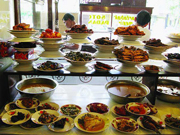 Sumatra Cuisine & Food – Beginning with the northern of Sumatra, try Acehnese food, is displayed and served at room temperature on many small plates, in the same way as Padang food, but some say it is more delicately spiced, with wider range of flavours, as in all Padang restaurants, between 10 and 15 spicy dishes are placed in front of you and you only pay what you eat.
 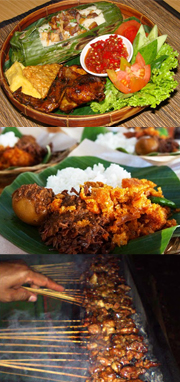 Java Cuisine & Food – The Javanese cuisine may be divided into four categories: Sundanese (West Javanese), Central Javanese, East Javanese, and Madurese cooking. For an excellent Sundanese meal of grilles carp (ikan mas bakar), spicy grilled chicken (ayam bakar), chilli prawn, barbequed squids (cumi-cumi bakar) and raw veg salad with shrimp paste chilli sauce (sambal uelek). The Central Javanese delicacies are fried chicken and gudeg (young jackfruit slow cook in aromatic spiced and coconut milk). Javanese chicken are only using free range chickens (chicken run free), as a result the are full of flavour but slightly tough in comparison with factory feed chicken in the west. The Javanese marinated their chicken by shimmer the chicken first in a concoction of rich spices and coconut cream for several hours, before deep frying them for about a minute at very high temperatures to crisp the outer coating. Gudeg is the speciality of Yogyakarta (Yogyakarta is truly unique city, ruled by king whose lineage can be traced to centuries), consisting of youg jackfruit slow cook in coconut cream and spices, served with boiled rice and fresh chilli sauce. East Java and Madura are known for their soups and their chicken/lamb sate (barbecued meat skewers). For soto madura (spicy chicken broth with noodles or rice). There are many sotos in Indonesia, as different regions and ethnicities have their own ways of preparing the cuisine, such as soto Madura (from East Java), soto Betawi (from Jakarta), soto Padang (from West Sumatra), so to Bandung (from West Java), soto Banjar (from South Kalimantan), and coto Makassar (from South Sulawesi).
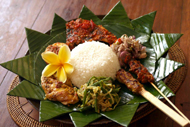 The Balinese food – The city of Bali offers you lots of tasty food to choose from. There are dishes like ever-popular Nasi Goreng (Fried Rice), Sate, Mie Goreng (Fried Noodles) with Ayam (Chicken) in various combinations. Check out the Bebek Betutu, a specialty of duck smoked in an eastern oven or Bubur Injun, a coconut rice pudding with fruit. In Bali, every meal is ignited with a typical red Balinese sauce that is truly out of this world.



 TrulyTravelIndonesia.Com