
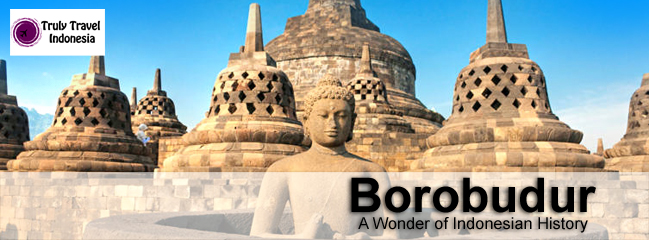
 Indonesia Proud Prehistory – Beginning of the 2nd Century A.D., a number of highly sophisticated civilisations emerged in Southeast Asia – civilisations whose cosmology, literature, architecture and political organisations were all closely patterned on Indian models. These kingdoms are best know for wonderful monuments which they created: Borobudur, Prambanan, Angkor, Pagan and others, many of which were “rediscovered” in the 19th century, and have now been visited by millions. Yet their creators remain largely an enigma. Who built these Indian monuments and how it is that Southeast Asians came to have such a profound knowledge of Indian culture in ancient time?
 Origin of Indonesia – An Age Of Empires

 The first Indianized Kingdoms – Knowledge of the early Indonesian Kingdoms of of the Classical or Hindu period is very shadowy, gleaned solely from old stone inscriptions and vague references in ancient Chinese, Indian and Classical texts. The islands of Java, for example, was mentioned in the Ramayana (as Yawadwipa). However, the first specific references to Indonesian rulers and kingdoms are found in written Chinese sources and Sanskrit stone inscriptions dating from the early 5th Century. The stone inscriptions (writing in the South-Indian Pallawa script), were issued by Indonesian rulers in two different areas of the archipelago-Kutai on the eastern coast of Kalimantan and Tarumanegara in West Java (near Bogor). Both rulers were Hindus whose power seems to have derived from a combination of wet rice agriculture and maritime trade.
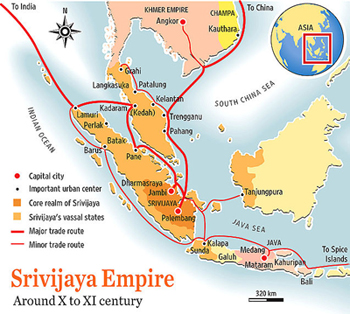 The Kingdom of Srivijaya or Sriwijaya – The Kingdom of Srivijaya left behind no magnificent temples or monuments because it was maritime kingdom that relied for its existence not on agriculture, but on control of the trade. Most of its citizens were therefore sailors who lived on boats, as do many of the coastal Malay orang laut (sea people) today. Knowledge of Srivijaya is consequently very sketchy and the Kingdom was not even identified by scholars until 1918. Four stone inscriptions in Old Malay, several in Sanskrit and a handful of statues and bronze icons are all about remain of one the most powerful maritime empire in history.
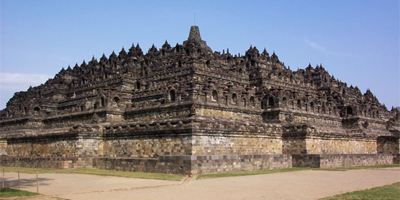 The Sailendra and the Sanjaya – From the beginning, a tension developed in central Java between competing Buddhist and Hindu ruling families. The first Javanese temples and inscriptions dating from 732 A.D., were the work of a Hindu ruler by the name of Sanjaya. Very soon thereafter, however, a Buddhist line of kings known as the Sailendra (Lord of the mountain) seem to have come from the north coast of Java to impose their rule over Sanjaya and his descendants. The Sailendras maintained close relations with Srivijaya (both rulers were Buddhist) and ruled Java for about 100 years. During this relatively short period they constructed the magnificent Buddhist monuments of Borobudur, mendut Kalasan, Sewu and many others in the shadow of majestic Mountain Merapi. Still today this area is blessed with unusually fertile soils, and already in ancient times it must have supported a vast population, who all participated in the erection of these state monuments.
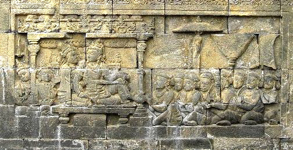 The mysterious Move to Est Java – Rakai Pikatan commemorated his victory by erecting the splendid temple complex at Prambanan, which can be considered a Hindu counterpart of Buddhist Borobudur. Both are terraced ancestor sanctuaries, highly elaborate versions of those constructed by Indonesian rulers in prehistoric times. A succession of Hindu kings ruled in central Java, then suddenly the capital was transferred to east Java around 930 A.D. No satisfactory explanation has been fro this move, though a number of factors might account for it. As mentioned before, the Sailendran kings, once installed at at Srivijaya, were successful in shutting off the vital overseas trade from Java’s north east, and may even have been threatening to re-invade central Java. An eruption of mountain Merapi at about this time may also have closed the roads o the north coastal ports and covered much of central Java volcanic ash. Whatever the reason for the move, an eastern Javanese empire Javanese empire prospered in the 10th Century and actually attacked and occupied Srivijaya for two years 990-A.D.
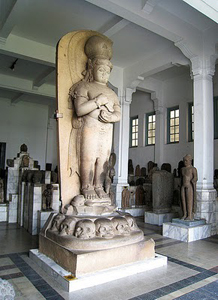 The Glory of Majapahit – Majapahit was the first empire to truly embrace the entire Indonesian archipelago. Later Javanese rulers, ancient and modern, have always looked upon this kingdom as their spiritual and political forerunner. Majapahit hit reached its zenith in the middle of the 14th Century under the rule of Wijaya’s grandson Hayam Wuruk and his brilliant prime minister Patih Gajah Mada. Knowledge of Majapahit comes partly from stone inscriptions found among hundreds of temple ruins discovered in the vicinity of the capital, but mainly from a panegyric poem written by the court poet Prapanca following the death of Gajah Mada in 1365. This text, known as the Negarakertagama, records all this kinds of interesting details about the court and the royal family. Majapahit’s decline set in almost immediately after Hayam Wuruk death in 1389. In year 1429 Majapahit had by this time lost control of the western Java Sea and the straits to a new Islamic power located at Malacca. Toward the end of the 15 Century, Majapahit and Kediri were conquered by the new Islamic state of Demak on Java’s north coast, and it is said that the entire Hindu Javanese aristocracy then fled to Bali. Islam first arrived in Indonesian archipelago not through a series of holy wars or armed rebellions. Although Muslim traders had visited the region for centuries, it was until the important Indian trading centre of Gujarat fell into Indonesian rulers began to convert to the new faith. The trading ports of Samudra Perlak and pasai on the northern eastern coast of Sumatra – ports that guarded the the entrace to the economically strategic Straits of Malaka – become the first Islamic Kingdom in Indonesia.
Arrival of the Portuguese and the Dutch in Indonesia.
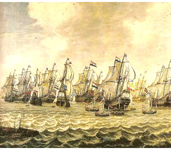 Arrival the Portuguese – When Portuguese vessels sailed into Indonesian waters in 1509, just 12 years after Vasco da gama’s pioneering voyage to India, Europeans were not wholly unknown in the archipelago. In fact a stream of European monks, adventures and merchants had passed through Southeast Asian ports from the 13th Century onward. The Portuguese legacy in Indonesia is therefore culture rather than political or economic. Mixed Portuguese Indonesian and Portuguese-Indian descendant of the original settlers formed separated communities in many towns of Indonesia, and for two centuries or more.
 The Dutch in Indonesia – The saga of the Dutch in Indonesia began in 1596, when four Dutch vessels led by incompetent and arrogant Cornelis de Houtman anchored in the roads of Banten, then the largest pepper-port in the archipelago. In 1602, therefore, they formed the United Dutch East India Company (known by its Dutch initials-VOC), one of the first joint stock corporations in history. It was capitalised at more than 6 million guilders and empowered by the states-general to negotiate treaties, raise armies, build fortresses and wage war on behalf of the Netherlands in Asia. By such nefarious means the Dutch had achieved effective control of the eastern archipelago and its lucrative spice trade by the end of the 17th Century.

Indonesia to independence.
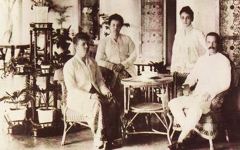 Indonesia to independence – At the beginning of the 20th Century, signs of change were everywhere in the Indies. Dutch military expeditions and private enterprise were making inroads into the hinterlands of Sumatra and the eastern islands. Steam shipping and the Suez Canal (opened in 1869) had brought Europe closer, and the European presence in Java was growing steadily. Gracious new shops, clubs, hotels and homes added an air of cosmopolitan elegance to the towns, while newspaper, factories, gas lighting, trains, tramways, electricity and automobiles imparted a distinct feeling of modernity. Indeed, thousand of newly arrived Dutch immigrants were moved to remark on the extremely tolerable conditions that greeted them in the colonies—–that is to say, it was just like home or even better.
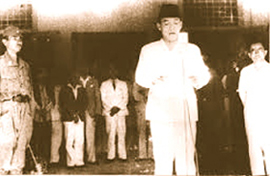 Revolution 1945-1950 – On August 9 1945, the day the second atomic bomb was dropped, three Indonesian leaders were flown to Saigon to meet with the Japanese commander for Southeast Asia, Marshall Terauchi. The Marshal promised them independence for all the former Dutch possession in Asia and appointed Sukarno chairman of the preparatory committee with Mohammad Hatta as vice-chairman. They arrived back to Jakarta on August 14th and the very next day Japan surrounded unconditionally to the Allies. Following two days debate, Sukarno and Hatta were persuaded to proclaim merdeka (indepence) on August 17th and the long process of constructing a government was begun. The following moths were chaotic. News of the Japanese surrender spread like wild fire and millions of Indonesians enthusiastically echoed the call for merdeka! — Finally in January 1949, the United Sates halted to transfer of Marshall Plan funds to the Netherlands and the UN security Council ordered to Dutch to withdraw their forces and negotiate a settlement. On August 1950-Dutch influence in Indonesia rapidly crumbled, the fifth anniversary of the Merdeka proclamation – all previous governments and agreements were unilaterally swept away by the new government of the Republic of Indonesia.
Indonesia Since Independence
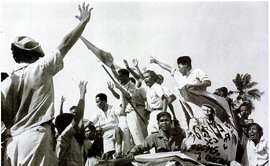 Euphoria swept trough the cities and towns of Indonesian following the withdrawal of Dutch forces and the secular of Indonesian sovereignty. Mass rallies and processions were held; flag-waving crowds thronged the streets shouting the magical words: “ Merdeka…merdeka!” (Freedom…freedom!). Independence had came at last, and trough many obstacles remained, Indonesian felt that nothing was impossible now that they held their destiny in their own hands.
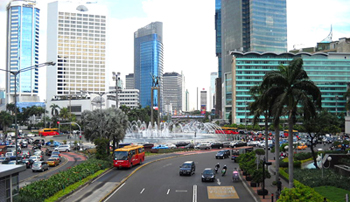 Jakarta, located on the north coast of western Java is the capital of the Republic of Indonesia. It is the seat of government, and center of business and finance. A large, modern metropolitan city with a population of 9 million people, Jakarta is a melting pot of all different ethnic groups in the archipelago. Indonesia now, after six decades of freedom, Indonesia has become the third largest democracy in the world. Despite facing today’s global financial crisis, the country has managed to show positive economic growth, and is internationally respected for her moderate, tolerant yet religious stance in today’s global conflict among civilizations.



 TrulyTravelIndonesia.Com