> Flora & Fauna
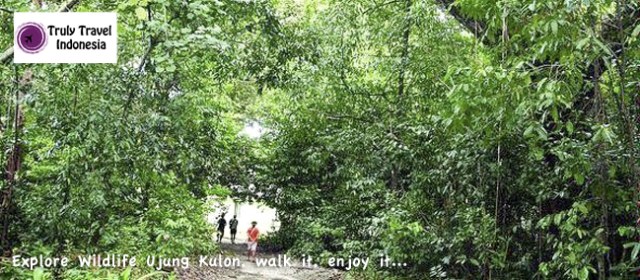 Indonesia’s wildlife ranges from the prehistoric giant komodo lizard to the Orang Utan and the Java Rhino, to the Sulawesi Anoa Dwarf Buffalos, to birds with exquisite Plumage like the Cockatoo and the bird of paradise. This is also the habitat of the Rafflesia the world’s largest flower, wild orchids, an amazing variety of spices, and aromatic hardwood and a large variety of fruit trees. Underwater, scientists have found in North Sulawesi the prehistoric coelacanth fish, a “living fossil” fish, predating the dinosaurs living some 400 million years ago, while whales migrate yearly through these waters from the South Pole. Here are hundreds of species of colourful coral and tropical fish to admire.
Flora of Indonesia
 The flora and the plant life of Indonesia derives almost exclusively from the Asian mainland, and incredibly diverse consisting of almost 40,000 different species belonging to 3,000 different families; about 10 per cent of all plant species in the world are found here. Most of these are natives of the fantastically varied equatorial rain forest, with its thousands varieties of wild orchids, palm, ferns, fruits, spices trees, and oddities such as the Rafflesia-the world’s largest parasitic bloom – you can find Raflesia Arnoldi in Bengkulu, one of the giant and unique flower in the world.
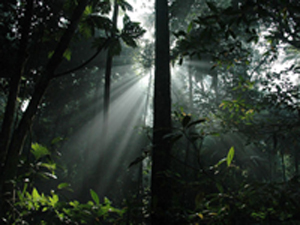 The flora of Indonesia consists of many unique varieties of tropical plants. Blessed with a tropical climate and around 18,000 islands, Indonesia is a nation with the second largest biodiversity in the world. The flora of Indonesia reflects an intermingling of Asian, Australian and the native species. This is due to the geography of Indonesia, located between two continents. The archipelago consists of a variety of regions from the tropical rain forests of the northern lowlands and the seasonal forests of the southern lowlands through the hill and mountain vegetation, to sub-alpine shrub vegetation. Having the second longest shoreline in the world, Indonesia also has many regions of swamps and coastal vegetation. Combined together, these all give rise to a huge vegetational biodiversity.
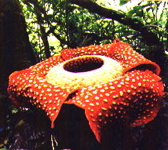 There are about 28,000 species of flowering plants in Indonesia, consisting 2500 different kinds of orchids, 6000 traditional medicinal plants used as Jamu.,122 species of bamboo, over 350 species of rattan and 400 species of Dipterocarpus, including ebony, sandalwood and teakwood. Indonesia is also home to some unusual species such as carnivorous plants. One exceptional species is known as Rafflesia arnoldi, named after Sir Thomas Stamford Raffles and Dr. Arnold, who discovered the flower in the depths of Bengkulu, southwest Sumatra. This parasitic plant has a large flower, does not produce leaves and grow on a certain liana on the rain forest floor.
Fauna of Indonesia
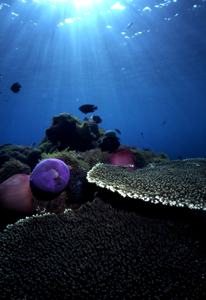 The Fauna of Indonesia consists of a high level of biodiversity due to its vast-size and tropical archipelago make-up. Indonesia divides into two ecological regions; western Indonesia is more influenced by Asian fauna, and the east is more influenced by Australasian. The Wallace Line—in fact, more an area known as Wallacea—notionally divides these two regions. This unique blend of fauna in Indonesia is also affected by the diverse range of ecosystems, including beaches, sand dunes, estuaries, mangroves, coral reefs, sea grass beds, coastal mudflats, tidal flats, algal beds, and small island ecosystems.
Ecological issues have appeared in the nation due to the rapid industrialisation process and high population growth, resulting in lower priority level to preserve the ecosystems. The situation has worsened by illegal logging activity, in which resulting deforestation; while other problems, including high level of urbanisation, air pollution, garbage management and waste water services also contributing to the forest deterioration.
Origin of Indonesian fauna – The origin of fauna in Indonesia is heavily affected by geographical and geological events on the Asian continental landmass and the Australasian continental landmass (now Australia). The present New Guinea island was connected with the present Australia continent, forming a supercontinent called the southern supercontinent Gondwana. This supercontinent began to break up 140 million years ago, and the New Guinea region (previously known as Sahul) moved towards the equator. As a result, animals from New Guinea traveled to the Australian continent and vice versa, creating many different species living in different ecosystems. This activities continued to occur until the two regions separated completely.
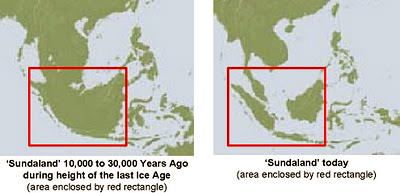 The influence of the Asian continental landmass, on the other hand, was the result of the reformation of the Laurasia supercontinent, which existed after the breakup of Rodinia around 1 billion years ago. Around 200 million years ago, the Laurasia supercontinent split completely, forming Laurentia (now America) and Eurasia continents. The mainland of the Eurasia continent, including China, was not separated completely from the Indonesian archipelago. As a result, animals from the Eurasia mainland could travel to the archipelago, and, under a different ecosystems, new forms of species were formed. In the nineteenth century, Alfred Russel Wallace proposed the idea of the Wallace Line, a notional line dividing the Indonesian archipelago into two regions, the Asian zoogeographical region (Sundaland) and the Australasian zoogeographical region (Wallacea). The line runs through the Malay Archipelago, between Borneo and Sulawesi (Celebes); and between Bali and Lombok. Although the distance from Bali to Lombok is relatively short, only about 35 kilometres, the fauna distribution is still affected by the line. For example, a group of birds would refuse to cross even the smallest stretches of open water. A second line, lying east, known as the Webber Line, has also been proposed to separate between “transition species” and species of Australian origin.
Indonesia’s moderate climate throughout the year, its fertile soil brought about by lava, and its minerals found on land and in the sea caused by volcanic eruptions, have made this the ideal habitat for a large number of unique wild life. Indonesia has among the most diverse variety of species of animal life on land and in the seas found anywhere in the world.
Touring the Parks and Reserves
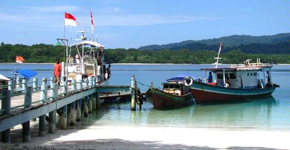 To preserve this Indonesia unique flora and fauna, Indonesia has designated 44 national parks throughout the archipelago, covering both land and sea, as well as botanic gardens and zoos. All Indonesian National Parks and Nature Reserves come under the jurisdiction of the directorate-General of Forest Protection Indonesian, initial PHPA, based in Pangandaran in South Central Java. There are also PHPA field offices in all 27 provinces, where visitors must make travel arrangements and reservations to visit the parks. Although the wildlife of Indonesian is spectacular, it is not always easy to observe. Good preparation and planning are essential. Many reserves have difficult access and almost all involve walking, so good health and sensible shoes and clothing are must.
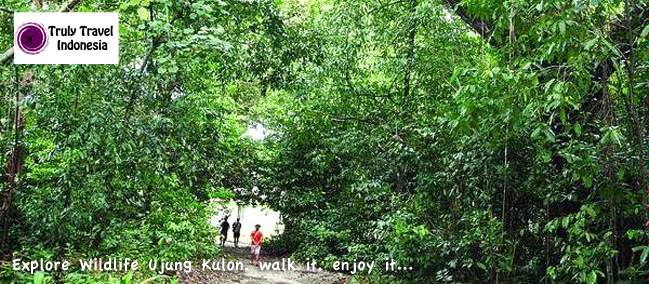 Indonesia’s wildlife ranges from the prehistoric giant komodo lizard to the Orang Utan and the Java Rhino, to the Sulawesi Anoa Dwarf Buffalos, to birds with exquisite Plumage like the Cockatoo and the bird of paradise. This is also the habitat of the Rafflesia the world’s largest flower, wild orchids, an amazing variety of spices, and aromatic hardwood and a large variety of fruit trees. Underwater, scientists have found in North Sulawesi the prehistoric coelacanth fish, a “living fossil” fish, predating the dinosaurs living some 400 million years ago, while whales migrate yearly through these waters from the South Pole. Here are hundreds of species of colourful coral and tropical fish to admire.




 TrulyTravelIndonesia.Com