> Yogyakarta
Overview
Yogyakarta or Jogjakarta or simply Yogya, is one of the foremost cultural centers of Java. Located at the foot of the active Merapi volcano, Yogyakarta was in the 16th and 17th centuries the seat of the mighty Javanese empire of Mataram., from which present day Yogyakarta has inherited the best of traditions. The city itself has a special charm which seldom fails to captivate the visitor.
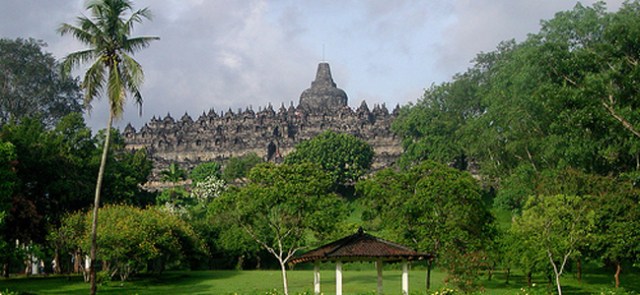
Yogyakarta, together with its twin city Surakarta (Solo), is the cradle of civilization of Java. Thus city was the seat of power that produced the magnificent temples of Borobudur and Prambanan in the 8th and 9th century and the new powerful Mataram Kingdom of the 16th and 17th century. Until today this city continues to produce philosophers, thinkers, masters, master painters and master craftsmen.
Yogya is famous as a centre of traditional textile production, particularly batik. The distinctive batik of Yogya uses the basic colors of brown, indigo and white with in geometric designs. Many young artists of Yogya have also embraced the modern art of batik-painting. Yogya is also known for its leather and wooden puppets crafts used for traditional shadow-puppet performances, as well as wooden puppet performances (wayang golek) that are used to act out ancient epics which contain popular but deep philosophical thoughts and teachings.
The Sultan’s palace is the hub of Yogya’s traditional life and despite the advance of modernity, it still emanates the spirit of refinement which has been the hallmark of Yogya’s art for centuries. Next to the traditional, contemporary art has found fertile soil in Yogya’s culture oriented society. ASRI, the Academy of Fine Arts is the center of arts and Yogya itself has given its name to an important school of modern painting in Indonesia, perhaps best personified by the famed Indonesian impressionist, the late Affandi.
Yogya is often called the main gateway to the center of Java where it is geographically located. It stretches from Mount Merapi to the Indian Ocean.
Yogyakarta – Local People and Culture
The people of Yogyakarta are known for their hospitality and good manners. If you show proper respect, you will be welcome in any part of the city. While its bustling cultural hub, Yogya is also slower paced and more relaxed than other cities in Indonesia. Many locals consider Yogya the perfect place to retire because of its air of serenity, tolerance and harmony. There is a reason why people say time moves slower in Yogya.
Yogya is the center of Javanese arts from the refined court dances to modern arts in painting and performing art.
Yogyakarta – Local Cuisine
Yogyakarta is truly a unique city. Ruled by a king (sultan) whose lineage can be traced to centuries, this city offers plenty cultural and historical heritage. Here in the street of Yogya you can eat lesehan style (without chair, only floor mat and table). The rather sweet cuisine of Yogyakarta might surprise you first, but many people have been longing for good Javanese food after trying it once, so you might have the same experience.
This city offers many tasty delicacies. From bakpia cake, bakmi jawa, to gudeg, here are some lists that are popular or have a long history:
Gudeg – is Yogyakarta’s most famous local dish, is a curry young jackfruit, this dish is made of young jackfruit with traditional herbs, simmered in coconut cream, sometimes combining with eggs and chicken. It can be served with dry dishes or with soupy dishes and it commonly consists of rice and your preference of topping.
Bakmi Jawa – Is a traditional Javanese noodle soup dish and most favourite dish in Yogya. Bakmi Jawa has different taste then another noodles soup dish. Normally, bakmi used the yellow noodle mixed with white noodle, then it’s mix together with the chicken pieces and cooked in a clay pot.
Bakpia – Yogyakarta becoming very famous place where produce bakpia. Bakpia is a cake made of green beans and other flavors. The color is brown and white. There’s no certain data about how it was came. But, mostly people believe its combination of Chinese and Javanese culture.
Ayam Goreng Yogya – Is fried chicken simmered in coconut cream with pepper, onions and coriander seeds.
Mangut Lele – Traditional food from Yogyakarta with taste bit hot and piquant before cooked, the cat fish grilled first then cooked with coconut milk and traditional recipe than after finish it very nice eat with steam rice.
Dawet – is one of the most popular Javanese traditional beverages. Javanese people know dawet for hundreds years. Every place in Java has its own dawet, similar one into another. But its story behind is always different. Dawet also used the traditional and natural essences to keep it delicious such as pandan leaf to get the green colour. Dawet also used in Javanese traditional wedding as a symbol of brotherhood and justice to human beings.





 TrulyTravelIndonesia.Com