> The Island of Java
Overview
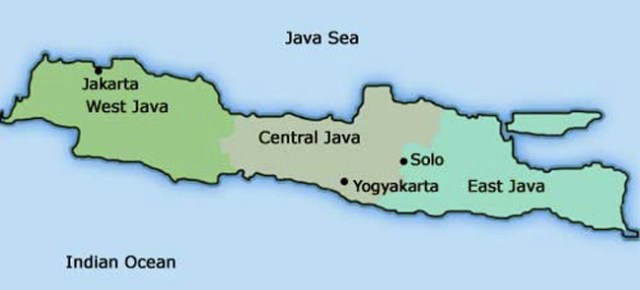
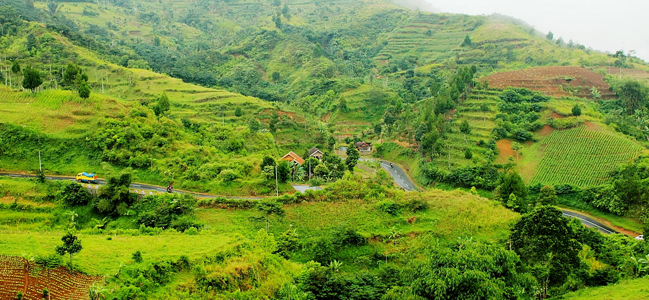
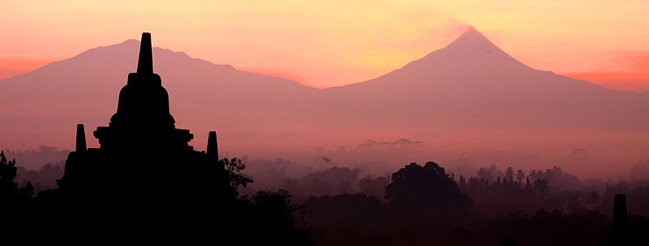
The fabulous fertile island of Java, home of one of man’s earliest ancestors, today virtually constitutes a world into itself. The landscape of the island of Java, is dominated by volcanoes and rice fields. The human landscape of this; the world’s most densely populated island is equally thrilling to the eye, and no visitor can remain unaffected by the special atmosphere that makes this island so unique.
Java is amongst the most romantic and highly diversified in the world, uniting all the rich and magnificent scenery. Javanese villages, towns and even cities are generally green places. The tropical climate is of course a central element: the equatorial heat is tempered by the surrounding seas, and the temperature rarely breaks 35° Centigrade. Humidity is high. The island is mountainous, and temperatures fall quickly on the slopes of the volcanoes. Subject to the southern cycle of monsoon winds, Java enjoys distinct dry and wet seasons.
There are approximately 136 million people live on this island. The majority ethnic population of Java island is Javanese and Sundanese. In general, the Javanese inhabiting the center and eastern part of Java while the Sundanese in the the western area. Although, now the island of Java has been lived with various ethnic groups from all over the world. Java is long and Narrow Island and the fifth largest island of Indonesia after Sumatra, Kalimantan, Sulawesi and Irian Jaya, and also the 13th largest island in the world, with an area of 132,000 km.
Beyond sheer weight of numbers, however, the Javanese and the Sundanese also possess rich historical record and a unique cultural heritage. Java’s dance and dramatic traditions, wayang puppets, gamelan music and batik textiles are famous the world over, as are her ancient temples and elegant palaces.
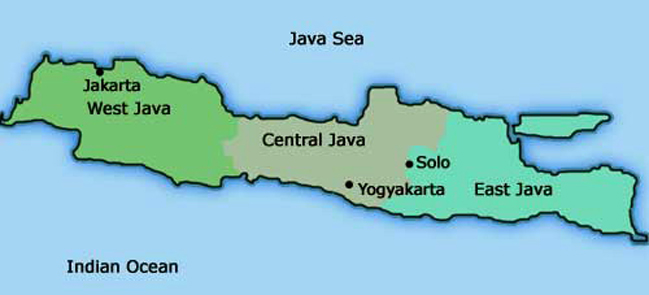
The island of Java Indonesia is divided into six provinces: Jakarta, Banten, West Java, Central Java, Jogjakarta and East Java.
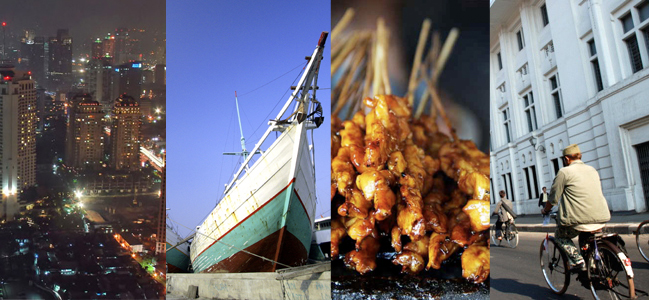
 Jakarta: Is the capital city of Indonesia, is located in northwest part of Java island. Jakarta has also been known by many name in its time, when the city served as a portal town for the Hindu kingdom of Sunda, it was known as Sunda Kelapa. Then changed name to Jayakarta when ‘Fatahillah’ the Muslim leader leader of the Sultanate of Demak from Central Java conquered the city (Jayakarta means “Great Deed” or “Complete Victory”). The next ruler of what was then only the seed of present day, Jakarta was the legendary Dutch VOC (Vereenigde Oost-Indiesche Compagnie or United East India Company in English) who changed the city’s name once again to Batavia. The name of Batavia lasted for over 300 years, during which time the early cultures and societies of Jakarta were shaped.
Banten: Was once a part of West Java province, but separated since 2000. Banten province consist of four regencies and four cities; Serang is the capital of Banten province. Sea area of Banten is one potential sea route, the Sunda Strait is one strategic sea traffic lane because links the big ship from Australia and New Zealand to Southeast Asia such as Thailand, Malaysia, and Singapore. In addition, Banten is the link between Java and Sumatra.
 West Java: The capital city of this province, Bandung, lies in the mountainous area while on the other provinces, the capitals lie on the coast area. The history shows that West Java is the province in the territory of Indonesia. This province comprises 17 regencies and 9 cities. This province has the largest population in Indonesia.
 Central Java: The capital of the province is located in the Semarang city, lie on the coast area, the province of Central Java consist of 29 regencies and 6 cities. Central Java is known as the “heart” of Javanese culture. The majority population of Central Java are Javanese.
 Yogyakarta or Jogjakarta (or Jogja or Yogya): Is the smallest province of Indonesia and one of the foremost cultural centers of Java. Located in the southern part of Java island and bordering with Central Java province in the north. Unlike other provinces in Java, Jogjakarta led by a king who serves as governor. From which present day jogyakarta has inherited the best of traditions. The city itself has a special charm which seldom fails to captivate the visitor.
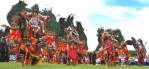 East Java: The capital city of this East Java province, Surabaya, the most fascinating province of the island, with magnificent Mount Bromo. The borders of east java is, java sea and Kalimantan island in the north side, Indian ocean in the south side, central java province in the west side, and Bali straits in the east side. Generally, East Java province can be divided into two main parts, that is land of east java with wider proportion almost 90% of the whole east java province, and Madura archipelago which is only 10%.
Languages of Java
There are three main languages spoken in the island of Java, beside the national language, Bahasa Indonesia.
In province West Java and Banten people speak sundanese. In Central and East Java, people spoken Javanese, and in the island of Madura people speak Madurese.
Beside these three main languages, there is another local language, Betawi, spoken by people of Jakarta.
Sundanese and Javanese have different level of words, high and low. Low Sundanese or Javanese spoken in daily day life while soft or high level were used to speak to Sultan or another inferior.
Here are the sum of languages in the island of Java:
• Javanese
• Sundanese
• Madurese
• Betawi (local dialect of Jakarta)
Arts and Culture of Java
Characteristics of Javanese culture is very complex. The island has a wide range of cultures, from the primitive, traditional, to modern. In general, the Javanese inhabiting the center and eastern part of Java while the Sundanese in the the western area. Every single area has its own culture and traditional art.
Jakarta has its own culture, namely “Betawi”. Which the influences reached this Special Capital District for centuries. This Betawi culture is uniquely blending Arab, Portuguese, Chinese, and Dutch elements with native ingenuity such as Malay and Sundanese has produces the colorful. The word “Betawi” is came from “Batavia”, the old name of Jakarta during the Dutch administration.
In West Java province is Sundanese. Although Sundanese live in the same island with Javanese, they consider themselves a distinct cultural area called Sunda, The Sundanese people are soft-spoken. The women of the Bandung region are known for their beauty. A lighthearted people who have a love for bright colors, their mournful “kecapi” music is memory of beautiful legends.
In Central Java is known as the central cultural of Javanese, where in the city of Surakarta (Solo) and Jogjakarta, there is Javanese royal palaces in this two cities that still stand today. One of the famous musical instruments of these regions is the traditional the gamelan, is a musical orchestra, featuring a variety of instruments such as xylophones, drums, gongs, metallophones, bamboo flutes, bowed and plucked strings. Vocalists may also be included. Javanese gamelan orchestra has a unique scales, which differ from international music, namely “Slendro” and “Pelog”.
Wayang or Puppet show, also the famous traditional art in the central part of Java and West Java. The Indonesian Puppet has several versions. Wayang Kulit (Shadow puppet) pretty well known in Central Java and Jogjakarta, while the Wayang Golek or wooden puppet is more popular in West Java. There is also a puppet version played by men, known as Wayang Orang.
Culture and customs of the East Java received a lot of influence from Central Java, so the area is known as Mataraman; indicates that the area was once the domain of the Sultanate of Mataram in Central Java (now at Jogjakarta and Surakarta). Just as in Central Java, Wayang Kulit are quite popular in this region. East Java has a number of distinctive artistry. Ludruk is one of East Java art is quite well known, namely the opera art show that all players are male.
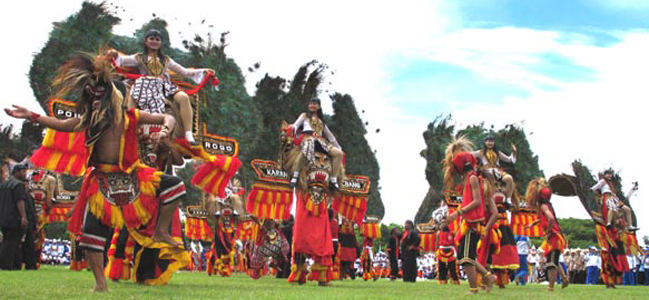
Reog Ponorogo now also become icons of East Javanese art. Reog show accompanied by equestrians (kuda lumping; is a traditional Javanese dance depicting a group of horsemen, the dancers “ride” horses made from woven bamboo and decorated with colorful paints and cloth) and supernatural elements. Other well-known art of East Java among others East Javanese style shadow puppets, Topeng Dalang in Madura, and besutan.
The History of Java
The long history of human inhabitance in Indonesia is perhaps best seen through the prominent archaeological remains that have been discovered on the island. Java Man, one of the first specimens of Homo erectus to be discovered, was found on the Java Island in 1891. Recently, a possible new species of the Homo genus, Homo floresiensis, has been discovered on the island of Flores just east of Java. Little is known about these humanoid ancestors, but the beginning of modern civilizations on Java is much better understood.
Tribes from Vietnam and southern China migrated to Indonesia about 3000 years ago, bringing their language, culture and technology with them. Their irrigation techniques allowed them to grow rice on the islands, which became a mainstay of island agriculture.
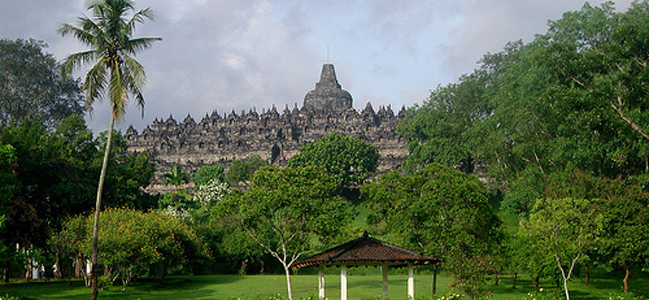
In the first centuries A.D., a powerful Indian empire took over the Indonesian islands, passing their Hinduism culture to people on the island and establishing trade outposts on Java. The Indians continued to rule over these islands until the early Middle Ages, when the Sunda kingdom declined and European and Arab merchants began to assert a much bigger influence.
By the 1500s, Islam had become the major religion on Java due to Arab contact, and several European countries were beginning to claim parts of Indonesia for trade purposes. European rule continued until World War II, at which point Japan took over. After the war, Japan ceded its territorial claims and Indonesia was granted independence.
The Javanese and The Sundanese Skills
The prehistoric Austronesian peoples of the nusantara had four great skills: as seafarers, as rice growers, as textile makers, and as architects. Five thousands years on, the people of Java are still worthy of this inheritance.
• Java’s mastery of the seas ended in the 17th century, but its engagement in trade and the affairs of Asia and the world remain.
• As farmers, the people of Java perfected wet-rice cultivation. Rice thrives in swamps and wetland, and the discovery that rice grew best in waterlogged fields must have been part of the Austronesians at an early date. Still, the gentle, curving slopes of the volcanoes of Java and Bali are perfectly suited to the establishment of irrigation systems, and it is in these soils wet rice cultivation reached its peak.
• The old textile heritage of the Austronesians has its greatest expression on Java today in the dominance of batik, a wax-resist method of colouring finished clothes. Though Javanese batik in the courts and on the North Coast has achieved a rare sophistication, it is still linked – through design motifs, dyestuffs and ritual – to the ancient textile tradition.
• As architect, the Austronesians were masters of the materials afforded in tropical and subtropical environments: wood, bamboo, rattans, grasses, and the products of the many varieties of palm tree. Making a most elegant use of these natural materials, the Austronesian house is characterised first and foremost by its roof. Supported by thick wooden columns which convey its load directly to the ground, the roof is the dominant element. Living space is typically formed by a wooden platform or raft, which is attached to the columns, and raised from the ground. Walls in an Austronesian house are optional. In Java, this is clearly seen today in the most characteristic feature of local architecture, the pendopo.



 TrulyTravelIndonesia.Com