> Bogor
Overview
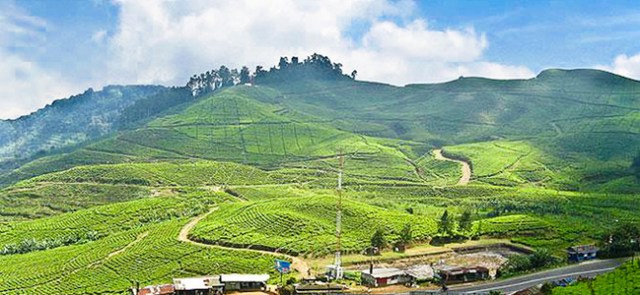
Bogor is a unassuming little town somewhere on a highland (290 m above sea level) yet not quite and just about an hour away from the main city Jakarta. It used to be the capital of Indonesia during the Dutch occupation and now a popular place for the Jakarta elites to have a summer home or for a cooling hideaway from the city.
Bogor, as an oasis of unpredictable weather – it is credited with 322 thunderstorms a year – cool, quiet Bogor was the chosen retreat of colonials escaping the stifling, crowded capital. Today, the long arm of Jakarta reaches almost the whole way to Bogor, and while a ribbon of green still just about survives between the two, the city is already choked with the overspill of the capital’s perennial traffic problems. But while Bogor’s transformation into a distant Jakartan suburb continues apace, the real oasis remains untouched. Planted in the very centre of the city, with the traffic passing idly by, Bogor’s botanical gardens are truly world class.
Previously known as “Buitenzorg” (Sans soucis or Without worries), during the Dutch colonial era, Bogor actually lies closer to Jakarta (50 km) than it does to Bandung (120 km). Appropriately named by the Dutch as a town “without worries”, they chose Bogor to be the site for constructing the first palace of the Dutch Governor General way back in 1745. Later restored in 1832, the palace still stands solid and elegant today with its stretched out gardens where deer roam freely on the green grass under majestically tall old trees.
However, Bogor is famous because of its Botanical Garden which borders the Palace Grounds, covering an area of 87 hectares with thousands of species of plant-life from all over the world, including towering age old trees and the rarest kinds of orchids. See the original “Havea Brazilliensis” rubber tree, formerly imported from Brazil, and world’s largest flower, the Rafflesia, a foul smelling and stemless as well as leafless plant.
Bogor – Local People and Language
People in Bogor are extremely friendly and will go out of their way to help you. Be polite and smile, and it will get you very far. English is not prevalent, but basic English is spoken by many in restaurants and in the local warung food-stalls.
The official language is Bahasa Indonesia. The traditional regional language, Sundanese, is widely spoken.
Bogor – Local Cuisine
Bogor, has many unique traditional foods. Soto Bogor is one of them, is a spicy aromatic noodles soup dish from its street food status to its rightful place as the signature dish of West Java and Indonesia. Very refreshing and healthy dish!
Other famous Bogor raditional foods are:
Nasi Timbel, is the quintessential Sundanese dish, which consists of rice wrapped up in a banana leaf, an assortment of raw vegetables known as lalapan (a term that covers cucumbers, tomatoes, lettuce, Indonesian basil leaves, cabbage and more), a freshly pounded chili sauce known as sambal dadak, some tofu or tempeh and maybe a fried chicken, fried fish (catfish or ikan lele) or some fried salted fish. This is commonly served with sayur asam, a savoury sour vegetable soup flavored with tamarind.
Toge Goreng, which Bogor’s popular dishes, is stir fry bean sprouts with yellow noodles (sometime with slice fried tofu) in delicious savoury yellow bean sauce and sambal (chilli sauce).
Batagor, is fried meat ball, dumpling, tofu, served with sweet soy sauce and spicy peanut sauce. Served also as a snack.
Martabak, is a fried stuffed pancake. There are two types: sweet and savory. Sweet martabak is a thick pancake stuffed with chocolate/roasted chopped peanut/banana/sugar. The savory martabak is a thin fried pancake stuffed with eggs, some vegetables, spring onions, mushrooms, seasoned mince chicken/beef and one filled with sweet corn and top with grated cheese.
Asinan, is a refreshing fruit salad of preserved raw fruit, sweet and sour taste, topping with fried peanut and rice crackers, which is unique to Bogor.




 TrulyTravelIndonesia.Com